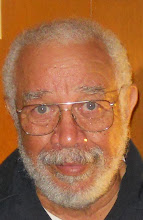
Friday, May 27, 2011

Who, What and When to Trust


     Lately, I've spent more time watching discussions of financial markets.  The differences of opinion expressed by the various financial experts reminded me of our political debates.
     Each of these guests is an expert, who has reached market conclusions based not only on the pool of information to which each has access but on how their personal intellectual, psychological and sociological systems interact with the circumstances and human inclinations they peruse. 
     But regardless of how much these experts express believes in their market predictions or expectations, they never invest based only on their own ideas.  They tend to invest in a manner that acknowledges that other opinions may be correct.  They diversify.
     However, present-day Republicans, despite most of them not being experts, are insist on investing the nation's future exclusively in their ideas.  There is seldom any mention of "common ground."  Republicans seem to be intentionally making ever aspect of every issue a source of debate.  I use Republicans to be inclusive of even Republican who don't necessarily agree with every idea that surfaces under the Republican banner.  I include them because they too often refuse to show their opposition with their votes.
     Republicans dug the financial ditch in which America finds itself, and Bush's Iraq war and tax cuts were the shovels.  The Republicans' position in 2003 was that the government budget surplus, which had been built up by tax increases and spending cuts during the Clinton presidency, somehow was the people's money and should be returned to them.   
     President Obama and fellow Democrats, along with decisions by President Bush at the end of his presidency and Republican support early during the Obama presidency, applied brakes to the free fall of the American economy.  Obama's actions bought the free fall to a halt: fewer jobs were being lost.  Soon more people were being hired than fired.  Banks were shored up.  And the big three auto makers had been saved, surviving prosperously and hiring among other things.
     But the media kept saying that the people would judge Democrats in the 2010 elections by their own present conditions and not be the fact that the nation's Bush induced condition (and potentially their own) was improving.   The media did not know how the American people felt.  It was as if these analysts were willing to have Americans blame Obama for what Bush had caused and give him no credit for ameliorating the condition.  Somehow this idea that the party that was trying to fix the problem (and succeeding) should be blamed and not the person who caused it made no sense to me.  The political party that thought the low taxes for the wealthy, that brought on the Great Recession, was good in 2003 still thinks it is good for America despite our still not being sure how to recover from it. 
      The strange thing is that Republicans are counting that Americans continuing believing those tax cuts for the wealthy were good for all Americans then and are necessary for the future success of the economy.  It may have been good for average incomes of all Americans but not nearly so good for the incomes of average individuals.  As someone wisely pointed out, if one averages the income of a typical American and that of Warren Buffet, that typical American becomes a billionaire--but without the money.
     Every Obama success makes it harder and less likely that Republicans can achieve their goal of making him "a one-term president."  He had Obama Care approved by Congress.  He found Osama bin Laden.  He withdrew troops and suspended major military activities in Iraq.  He is committed to beginning substantial troop withdrawal from Afghanistan this Summer.  He very likely will suspend major military operations in Afghanistan by the end of the year.  But all of these achievements and prospects of achievement will only make Republican less willing to help Obama succeed wherever they can, or to give him credit wherever he does.
     However, the New York congressional election shows that not all Republicans, especially those outside the Bible belt, vote according to dictates of the standard Republican propaganda.  While they may not agree with much of the Democratic ideology, they also don't support Tea Party craziness.  They don't believe columnists and commentators who deliberately distort Obama and Democratic positions.  And despite some of these people's claim to be born-again Christians, Precinct 26 voters were not deceived about the truth of the issues at hand.
     Even as they blocked most of Obama's efforts to stimulate jobs creation, Republicans blamed Obama for not producing enough jobs.  Yet during their tenure of being in control of the political agenda, Republicans have failed to suggest any of those ideas they claimed Obama should have used to create jobs.  Only fantom jobs, which presumably giving more money to oil companies, millionaires and billionaires would produce, were recommended..
     Americans of all political and ideological persuasions, therefore, must be able to distinguish between those ideas and actions that are sincerely believed to be the best of known alternatives , and those that are obviously designed only to defeat a president in the next election and to enriching the wealthy.  They must realize that economic problem are not solved by continuing what caused the problem.
     In 2010, both Tea Party and Republican politicians fooled both independents and the majority of their political bases.  The results in the special New York congressional election suggest that, in 2012, shame may well be on these politicians.
     America's greatest fear, though, is that most Republicans weren't merely fooling the American people in 2010 as a political strategy:  These politicians may have been saying what they actually believed.  And their craziness about not raising the debt ceiling may not seem crazy to them.  
     America's greatest hope is the suggestion by the NY-26 special election that most Republican politicians are rational, and are only temporarily acting crazy.

Ronald
Email:  rcspoon@earthlink.net
Blog:    www.ronaldcspooner.blogspot.com
    

Friday, May 20, 2011

Debt Reduction Strategies and Obstacles

     As is the case for many people concerning my opinions, I read Mr. Thomas' columns "A Solution to the Debt Menace" with great reluctance and my usual skepticism.  I could only imagine what this one was about.   
     I became even more skeptical when I read that the plan Mr. Thomas was writing about was developed by The Heritage Foundation but I found much in the recommendation that even I could support.     For the last 15-20 years, I have suggested that Social Security and Medicare should be what has become known as "means tested."  In other words, these safety nets should be available to people in proportion to their ability to pay and need to be covered.   
     Homeowners insurance, auto insurance, term life insurance, income-protection insurance, hospitalization insurance and various kinds of warranties that we purchase don't guarantee those paying for the coverage will ever receive benefits.  We buy protection but hope we never need them.  The same applies to Social Security and Medicare:  Most young people hope their future financial conditions can obviate the need for either.
     However, for too many years benefits have been given to those not needing them but willingly accepted them.  People no long feel guilty about receiving what they don't need, even if it means simultaneously expanding the numbers and failing to address the needs of the most vulnerable Americans..
     When I first recommended gradually phasing out Social Security and Medicare benefits as incomes increased,  I also suggested that future benefit adjustment be considered to differentiate between people who choose not to have or adopt children and those who have them.  
     Children who are gainfully employed contribute to pools that finance much of their parents retirement and medical care benefits.  As it stands now, people with no children receive the same retirement benefits as those with five children gainfully employed and paying into the programs. 
      I've forgotten what remedies I proposed at that time.  But one reader said I should "have (my) head examined" and that the editor should have his examined for printing it.  I may have suggested that retirees' benefits should be related to the incomes of their children.  This would have given parents an incentive not only to have children but to educate them well.     
     Some practices, however, continue to seem appropriate only because they have been in operation for so long, not because there aren't better alternatives.  Like it or not, the success and sustainability of Social Security and Medicare relate directly--even if not solely--to the earning power of retirees' children.   And problems cannot be resolved by ignoring factors that contribute to the problem.     This aspect of the solution, however, also would be phased in over a period of time.   
     I am disappointed, to say the least, that, whereas Republicans have the Paul Ryan Plan and The Heritage Foundation Plan to address problems related to our long-term national debt, Senate Democrats and liberal think-tanks have not come up with debt-reduction plans of their own that are consistent with their values and indicative of the vision they have for the futures of all Americans.  
     The Democrats' plan seems to be having the Senate come up with a compromise plan with Senate Republicans that will, then, be further compromised with the House approved Ryan Plan.  A 50-50 compromise in the Senate would become a 25-75% compromise by the time something is agreed to that will pass both houses.  
     That's right:  25% is likely all the President and fellow Democrats can get from Republicans.  Whether "the people" knew it or not, that's what they asked for last November, either with the votes they cast or with the votes they failed to cast because they failed to vote.   Democrats are mostly the blame, however, for not persistently and emphatically pointing out to supporters and potential voters both the possible and very likely consequences of not voting.
     Republicans, emboldened by last year's elections, will not approve paying the nation's bills (they will even risk devastating the world's economy) unless Democrats surrender.  The resulting legislation will be a longterm social disaster,         
     But President Obama cannot lead where this Congress doesn't want to go.  And with Republicans controlling the outcomes in both houses of Congress, Obama can either lead the nation where Republicans want to go, or refuse to lead at all, and allow voters to decide next November what they want.  We can hope, that in the meantime, Democrats and Republicans agree on a strategy to recover from an even worse economic condition than the one they are presently unable to resolve.
     But the 25% that Republican concede doesn't have to be that bad if it includes things like: extending the Bush tax cuts for the middle class, not touching Medicaid and student loans, extending unemployment benefits through 2012, means-testing Medicare and Social Security, and earmarking cuts only for areas that can be tolerated until voters in 2012 get perhaps their last chance in to get it right, and eventually repeal the disastrous legislation that likely must be approved this year.  
     As America moves from where we are to where our economy and our politics are that change must be considerate of the potentials for human pain, and assure that pain is born in proportion to people's ability to endure and emerge from it as better people, with a plan that sustains economic recovery and promotes political integrity.  Big business and politicians who serve the wishes and needs of their constituents have the collective ability to make such a win-win recovery a reality.   But where the wishes and need of people are secondary, big business and their politicians can bring this country to its knees.  
     The past ten years have found democracy in America trending toward oligarchy or something resembling it.   As peoples of the Middle East and the rest of the world seek to embrace the hopes of democracy and the blessings of liberty, Americans find themselves in a battle to hold on to their own.

Ronald
EMail:  rcspoon@earthlink.net
Blog:    ronaldspooner.blogspot,com

Monday, May 9, 2011

Valuing Dot-Connecting

     There is some debate concerning the extent to which water boarding yielded information that led to the finding of Osama bin Laden.  Some Republicans want give water boarding considerable weight; others give it 0-2% 
     But two things are certain, though:  First, whereas, the Bush Administration failed to connect the dots that could have prevented 9/11, the Obama Administration put together the dots that led to bin Laden's capture within two years.   And, second, all of the information that Obama used--even if it included some evidence obtained through torture--was either known or available to be known during G. W. Bush's presidency.  Again, however, Republicans were not able to recognize and collect dots that could have been connected. 
     But two things are certain:  First, whereas, the Bush Administration failed to connect the dots that could have prevented 9/11, the Obama Administration put together the dots that led to bin Laden's capture.  And second all of the information that Obama used--even if it included some evidence obtained through torture--was either known or available to be known during Bush's presidency.  Again, however, they were not able to recognize or collect relevant dots to connect. 
     Republicans are eager to give Bush much of the credit for finding bin Laden--even as they insist on giving Obama full blame for the Bush-induced recession.  But it was Obama who announced that, if he had actionable information about the location of bin Laden in Pakistan, he would not seek Pakistan's permission to get him.  Although he seemed to lose interest later during his presidency--likely born of frustration--Bush did say he "wanted bin Laden Dead or Alive."  Obama delivered him dead, and buried him at sea with a dignity that was consistent with his faith, though consistent not with his deeds.
     As speculation rises concerning the possible role of Pakistan in harboring bin Laden, or in not having the vigilance to discover that he was around, questions are being raised about the circumstances surrounding bin Laden's death:  Was it necessary?  Was he armed?  Was he attempting to defend himself?  Was he going for a weapon?  All of these questions are being raised by people who are concerned that he may have been killed without being given as opportunity to surrender and be brought back for trial.
     This is because among the great diversity among Americans--we are diverse by race, religion, color, national origin, language, ideology, gender and sexual orientation to mention a few--significant diversity exist within Americans themselves concerning when life is to be valued and when death is appropriate.  
     Many liberals vigorously defend a woman's right to terminate the life of her unborn child even as they argue just as vigorously against death penalty.  Many conservatives defend just as vigorously the right of a baby to be born even as they defend a state's right to take the lives of those accused of killing others, despite the frequency of the convicted eventually being found innocent, .  Each group has within its own value system a conflict concerning when life it to be valued.   A discussion about that conflict, within our moral and legal systems of justice, is natural now that Osama bin Laden has been found, and perhaps executed. 
      Let's continue the discussion by examining the circumstances surrounding this mission--assuming what is being reported so far is correct.  A plan to either capture or kill bin Laden had been thoroughly practiced, and when considered ready to be executed still was given only a 60-80% chance of succeeding. 
     Suppose, then, the plan had been to capture bin Laden.  Wrapped in that 20-40% chance of failure would have been the possibility of his eventual escape  or rescue.  Unanticipated and uncontrolled circumstances could have resulted in a captured bin Laden being on the loose again.  (It has also been suggested that bin Laden might have had a self-detonating bomb strapped to himself, potentially endangering the lives of American captors.)
     In either case, most Americans of all political persuasions would have been insisting that bin Laden should have been killed, and his possible escape not risked.  Republicans would have been claiming that they would have delivered him dead.  And Obama's defeat in next years election likely would have been signed, sealed and delivered regardless of what the economy did. 
     Osama bin Laden was a special criminal:  He was a deadly international enemy.  The circumstances leading to his capture were among the riskiest for several reasons, and the odds were against his ever being found again.  Still, despite bin Laden's death being necessary--and given the circumstances perhaps preferred by him--some concern about the means will linger. 
     President Obama was successful in capturing bin Laden because he did not need Republican help to do it.  Can you imagine what would have happened had Obama asked Congress' permission to get him?  We'd still be debating whether we could afford it.
     Barack Obama was elected president because of his integrity, wisdom, intelligence and determination to solve difficult national problems .  It took him less than three years to catch bin Laden, because he had time to do it.  And he'll solve our other problems, too, if we give him time and some help.
     It's not likely that the party that did not know how to keep this country and the world out of the Great Recession, did not recognize the symptoms of the pending catastrophe, and did not suggest measures that could have prevented it would know how to solve present  problems and prevent others.  
     Republicans  have been inept at recognizing and connecting dots related to the nation's security and prosperity.  And few Americans believe that Obama's becoming president, somehow miraculously made them smart.

Monday, May 2, 2011

Returning to Effective Schools

     There is much discussion in the United States concerning the lack of opportunities for most children to acquire a quality education.   There are many examples emerging of successful programs being designed and implemented.
Most of the strategies involve planning that improve instructional strategies, and testing students to assess the quality of instruction.  But testing must be frequent, and feedback to the students and teachers immediate, if remediation is to be timely in laying foundation for future instruction. 
     During reform efforts in Texas in the mid 80s, much emphasis was placed on instructional objectives, testing for levels of mastery, and reteaching when student performances were not satisfactory.  Many teachers tested at the ends of weeks or chapters.  
     In most cases, however, too much content from previous lessons had been covered for students to review and learn, while keeping up with current assignments.  Students who could not satisfactorily master one week or chapter of content now were expected to master two.  Many teachers were only going through the motions of reteaching. and administrators who didn't know how to help them do better didn't complain.
     In many areas, immediate mastery is required before student can mastery the  content that follows.  Daily testing--and immediate feedback to the teacher and student--are imperative if subsequent learning is not to be impeded by lack of prerequisite learning.  This requires planning and cooperation between teachers and students, not only within the classroom during regular school hours but before and after school, and during study hall periods, where students study and learn how to do so effectively.  The strategy extends opportunities for parents and the community to offer assistance.
     One strategy involves giving students copies of chapter objectives, time-lines for coverage of sets of objectives, quiz schedules, copies of all exercises and examples that accompany each set of objectives, and textbook sections related to the objectives,which were to be read.  In some cases students should be given  problem answers associated with both current and future lessons so students who choose to study and work ahead will know if they were doing so successfully.  
     Students should be quizzed everyday on homework, and received credit for the homework only if the quiz was passed.  Three attempts might be allowed, only the first during regular class time.  Students soon realize that they must do their own homework--or study what they copy--if they are going to pass quizzes and get credit for the homework.  
     It is helpful to label all objectives and problems as (a) advanced, (m) medium and (b) basic.  Students wanting to earn A's would be required to work the most difficult problems and answer the most difficult questions.  Grades of "C" would require mastering the basic content at the 90% level.  Grade of "B" would require mastering basic and medium content at the 90% level.  And grades of "A"  would require students to master the total content.  All students should exposed to entire content and students allowed to find their own levels.   This process was not perfect, but it will produce better students.
     During Texas' reform effort in the mid 1980s there was much discussion in professional literature circles about "Effective Schools research."    A school was considered effective based, not on the percentage of  students passing a test, but on tests showing improved student performances at all levels.  
     School success based on the percentage of student passing a test can be effectively achieved by giving the poorest students access to the best teachers during before school and after school sessions.  But that should not deny the top students access to these teachers and to appropriate levels of challenge.  No school should be considered exemplary unless it also is effective..   
      In effective schools, principals and teachers were effective.   And in the most of them students are not segregated, academically.  In academically mixed classes, top students are able to help teachers help other students.  Such tutoring reinforces what top students have already learned, and their presence allows them to be role models for other students.  Many underachievers are academically talented but don't know how to develop that talent and use it.  Many have had no previously encouragement or incentives to do so.  Effective principals expect and help all teachers become effective consistent with their potentials to perform.  
      Students learn better when they take daily quizzes, chapter tests, semester tests and final examinations.  Quizzes and tests encouraged review and practice, and are themselves review and practice.  Unfortunately, limiting the definition of success to pass-fail does not challenge top students to become mathematicians, scientists, engineers, doctors, nurses, technician, teachers and other quality professionals.
     But effective principals must either have been effective teachers themselves or have learned and practiced the qualities of effective teaching during their pursuit of administrative certification and advanced degrees.  Not all effective teachers, however, possess the other qualities necessary to become effective principals.  And neither is administration an ambition of most effective teachers.  
     Despite the current emphasis on improving out children's education, though, little is heard about effective schools and effective schools research.  Perhaps the reason is that it's easier to increase the number of students passing a test than it is  to enable all students to maximize their potentials to improve.  
     Students also tend to do better when they took five academic classes and physical education or band.   One reason: Class periods were longer and students had fewer classes for which to prepare.  There was once a belief that less was more, that engaging students at greater depth in fewer courses laid foundations for more challenging content and careers later.   Now, we seem to be exposing students to more but expecting less. 
     
Ronald
Email:  rcspoon@earthlink.net
Blog:    ronaldspooner.blogspot.com

Thursday, April 28, 2011

When Religious Dogma and Political Ideologies Collide


    President Obama's speech on debt reduction was one of the best speeches he has crafted.  It established the goals that characterized both the America we have known and the America we want others to believe we are.   But the character and compassion that are the face of America don't characterize all Americans. Consequently, not everyone found the speech equally appealing.
     Republicans say they seek to severely cut federal spending and rapidly reduce the national debt because that is what the American people send them to Washington to do.  Even Republican who were not elected in 2008 say that, despite polls to the contrary.
     People with religion faith should not compromise their principles in living their own lives.  But in a nation of people with different religious faiths and different views about religion, the principles of the people's religious faiths sometimes must  acknowledge and tolerate behaviors that are contrary to their own beliefs.  Because of such diversity of beliefs, adultery, for example, is not illegal in America.  
If America were a religious state, abortions very likely would be considered both morally and legally wrong.  
     But not every American has religious faith and even Americans with the same faith react differently to the faith's teachings.  Many Americans tolerate abortions, not because they believe the practice is morally right, but because they choose to be tolerant to fellow Americans who believe abortions to be legally permissible under certain circumstances.    .
      Everybody has to sacrifice economically and compromise ideologically in order to reduce the nation's debt.  But who should make bigger sacrifices: wealthy individuals who earned and have much more money than they need, or the middle class who, in many cases, barely earned and have enough to survive, and the working poor and unemployed who still neither earn nor have enough?  Jesus addressed the question.  And even atheists know the answer.  Certainly those who service the rich will earn more when the wealthy pay less taxes.  But those who service the middle class and working poor earn more when these American are taxed less.  But which achieves more for most people?   Despite Republican claims that they know the answer, they don't.  
     There is certainly no conclusive evidence that the Bush tax cuts created jobs and reduced national debt.  Nor is there evidence that, by making tax cuts permanent, the effects of reduced government spending and increased spending and investing by the wealthy would enhance debt reduction more than would adding these taxes to the federal treasury.  
      Republicans seem to believe it is  economically better and morally appropriate to impose economic pain on powerless people in the near future so wealthy Americans won't be inconvenienced by debt in the distant future.  They claim they don't want to leave debt for their children and grandchildren.  But at the same time they are trying to so enrich the parents and grandparents of these future generations that their inheritances will prevent any lingering debt from affecting their standards of living. 
      Most American families have gone through a period when they had a house note, a car note, credits cards, various kinds of insurance, savings and investments and other expenses. (You'll notice I didn't mention traveling.)  But they paid them off in time, first, because they did not buy or spend on things they could not afford, and, second, because one or both parents had jobs that brought income into the home.  Should a family's economic status get to the point where parents must choose between having an insufficient amount of food on the table for the children or having the mother get a job, or the father getting an extra job or a better paying one--or all three--the parents will choose bringing more money into the home.  They won't choose to starve the children or stop payment on the car.  In tough economic times, governments also can pay its bills if it eliminates wasteful spending and raise revenue through taxation, but it, too, should not choose to do so by starving the helpless or not treating the ill.
     If families are better off by spending less and saving more, why would that not also be true of government?.   In an emergency, federal needs may exceed  savings, and like a family, must borrow money and pay it back within a time-frame it can afford.    
     Unfortunately, Americans who have been convinced that big government is bad for them often need big government.  If small government were so good, why are so many states and cities having budget problems.  And governments don't get much smaller than school districts.  Why, then, are so many American schools failing to educate children well?       
     But government can be no more responsive to the needs of powerless people than is the character of the people who elect politicians to office.  As the character of a nation deteriorates, the kinds of things politicians they elect do become more outrageous, power is usurped, competition is squashed, and democracy dies. 
     Reducing the national debt and balancing the federal budget obviously aren't easy tasks.  But both seem more humane and effectively achieved when, during tough economic times, economic pain is reduced for those who need help and economic sacrifice is increased for those who can give it,  gradually reversing the process as the economy improves, when the less able need less help and have more buying power, when increased tax cuts provide the more able with greater opportunities to invest and further enhance economic growth.  
     That will require a diverse America to have a shared vision, whicht seems to be where President Obama wants to lead the nation.  Republicans either can't see that far, or they won't look.
      
Ronald
Email:  rcspoon@earthlink.net
Blog:    ronaldspooner.blogspot.com

Saturday, April 16, 2011

Debating the Pursuit of Happiness

     The debate about the future of America must be about more than politics and the economy of the country.  It must be about the people, their education, their values, their relationships, their religion (the relevance of one's own faith) and the implications of each in the people's pursuits of quality, meaningful and productive lives.  
     In times like these, people who are respected and consensus experts in these areas of expertise should be joining economists and politicians in the debate about the nation's future, speaking to the implications of their particular areas of expertise to this matter of pursuing happiness in the United States.  Teaching about the relevance of these areas in seminaries and in the classrooms of great universities--and especially not teaching about them at all--are not sufficient in a nation still experimenting with securing the blessings liberty for everyone.  
     The country--the people at home--needs to hear from them.  The listeners of CBS, NBC, ABC, FOX and MSNBC need to hear.  And the broadcast and printed media need to invite their points of view in addition to those of economists and politicians--and just as often.
     We are in the midst of a great political and ideological debate.  But it's about more than about Democrats and Republicans believe:  it's about what it means--or should mean--to be an American.  It's the most urgent, timely and engaging debate the nation would have had since the eighteenth century.

Tuesday, April 12, 2011

On Becoming a Less Perfect Union

     As Democracies age, they become victims of those who exploit weaknesses they build into the system, as they  learn to make the democracy work for themselves at the expense of others.  They lose interest in "secur(ing) the blessings of liberty" for anyone but than themselves.
     Democracy in America is not the "more perfect union" envisioned two hundred years ago by the Founders.  And it can be neither attained nor sustained by lesser leaders, with  less integrity, and without the inspiration of God who can make "more perfect" possible.
     As the decisions democracies make become more complex, they require a more educated, informed and discriminating populous to make the democracy work.  But we are living in a period where, as the problems and solutions are becoming more complex, our level of education in America for the general public is declining.
     Thomas Jefferson, a Founding Father, believed that any one who thinks a nation can be both ignorant and free (was) thinking what never was and never shall be."  Quality education broadens exposure to ideas and possibilities.  It liberates the mind to be creative and to judiciously examine and evaluate opinions and options.  It implores the mind to the informed.
     A poll of citizens prior to the 2004 presidential election suggested that 20% of Americans (1 in5) believe that Iraq used weapons of mass destruction against the United States during the Gulf War, and 33% (1 in 3) believed that the United States has found those weapons.  Those likely are voters who will, as a consequence of their feliefs, support the President for in 2004.  If that was a fair sampling of voters, then the President already has one-third of the votes he needs just from the uninformed.  All he needed was a little more than 17% of the informed voters and he wins. Uninformed voters making decisions is one feature of democracy that make it "the worse kind of government--except for all the rest."  The only solution is to provide the public with quality public education, where children are required to read and write about current issues in order to evoke their real opinions about controversial issues.
     Americans have been losing jobs overseas for the past thirty years or more.  According to experts, the solutions rested in technology, which was to create more jobs that it eliminated.  I never quite understood how that would work.  And it didn't.  Then they said the low paying jobs would go overseas, but the higher paying jobs would be increased in the United States.  Well, that didn't work either.  First, because the public school systems in the united States did not produce enough quality students with the skills to handle (or qualify for) those high paying jobs.  And rather than develop schools that could produce the desired products, industry has chosen to get the skills overseas for less money.
     Part of the problem is that corporations are in business primarily to make money for shareholders.  Providing jobs is secondary.  Workers are forced to increase assets in 401Ks by having jobs go overseas or south of the border.  Workers, in effect, lay themselves and fellow worker off.  We can't blame CEO because they just work there.  And their job descriptions, as presently defined, involves making as much money as possible, not creating as many jobs as possible.
     At some point, America must come to grips with the fact that our average standard of living relative to the rest of the world is--and must be--on the decline.  It may even be declining relative to what it once was.  Right now, that average is increasingly an average of more those who have too much, those who have too little, and a declining center.  In a working democracy, that average should be an  expanding center.  
     Standards of living must decline.  We must build smaller homes, small enough to only comfortably accommodate family  members.  The wealthy must stop building homes that are too expensive for future generations to afford.  We must cease establishing high standards of living in America that people in the  undeveloped world seek to attain at the expense of the middle-class jobs.   We are motivating them to better educate themselves, even a Republicans do all they can to not educate and miseducate certain fellow Americans--or teammates.
     Ofter jobs could have been saved id experienced workers worked fewer hours or approved across-the board cuts in pay.  Workers could have saved more money during good times so they could afford to work fewer hours or at a lower rate of pay during tough times.  Standard of living would be based on tough time salaries, prevent preventing workers from incurring excess debt which in the future could cost co-workers jobs.  (Workers also would have kept their skills current.)
     The federal government should have a greater role in overseeing the relationships and agreements between corporations and employees.  There should be either job security or income security.  The government, corporations and workers must contribute financially to guaranteeing either jobs or incomes until workers can find jobs with comparable incomes, or unconditionally supplement lesser incomes until better jobs can be found.   While businesses must serve the interest of their investors, government must serve the interest of all Americans a strike a proper balance.
     The lack of sufficient jobs caused by jobs going overseas is exaggerated by the fact that increasingly husbands and wives have two good-paying jobs, leaving other homes with either poorly paying or no jobs.    The middle class is shrinking because many families are moving into the upper class--becoming rich, if not wealthy.  In many cases these are achieved by pushing others from the middle class into the category of working poor, and from working poor to just poor.             
     Most middle class and poor Americans have little hope of becoming better educated without extraordinary self-motivation and significant help from others.  This lessen their desires and expectations that the US economy will satisfy their increasing desire for both bigger things and need more than they can afford.    
      Americans have collaborated to establish a less perfect union.