Wednesday, August 8, 2012

60 Years of Marriage and Still Not Tired


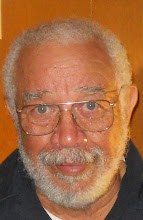
     Recently, my wonderful and still beautiful wife and I celebrated the 60th anniversary of a marriage which blessed us with five children, nine grandchildren, two step grandchildren, five great grandchildren and eight step-great grandchildren.  As they had done for our 50th anniversary, family members planned to make the celebration of this anniversary a special event, and special it was.  All members of the Annie L. and Ronald C. Spooner family took the time to be there. I had long hoped for a marriage made in Heaven.  But the girl who would make that possible stayed disturbingly absent for far too long.   
     Thoughts about her frequented my mind, even as I longed for the day of our meeting, thoughts of a beautiful young lady, walking alone a sidewalk of some large city.  I had had no luck back home, and was having no better luck during my first year at Wiley College.   Imaginations were all I had.  But he second quarter of my second year revealed a ray of hope. The gates of Heaven seemed on the verge of opening to release another angel.  
     A second-quarter dance was being held in the college gym for incoming freshmen.  I decided to attend and, from high up on one end of the bleachers, view to see if the girl of my dreams indeed had arrived. ( By now, it didn't even matter if she was from Texas.) There was one young lady with long hair that caught my eye, mainly because she danced so often.  All of the young men wanted to dance with her.  I hadn't noticed whether it was because of a shortage of young ladies--as she suggest to me later might have been the reason.  The only thing that mattered was that she looked like an angel to me.  
     I left the dance thinking this could be the one, but I didn't give her any further thought.  After all, I wasn't exactly in desperate need of a girlfriend.  I was a waiter in the cafeteria, and never even looked for her there.  I never even chanced to see her--at least, not to recognize her.
     But plans had been made for the special bus to carry Wiley students from Beaumont and Port Arthur home for the Christmas holidays.  And while waiting for that bus, we encountered each other--sort of.  She was standing alone when I arrived at the meeting site.  I spoke.  She said, "Hello."  But as I turned around to put my suitcase out of the way, she turned her back to me.  She wore a gray suit that fit her every curve.  When they started making Coca Cola bottles, she had been the mold.  She was good-looking even up close and in the dark.  She must have known I was looking and thought to herself if I weren't, I should have been.
     As I started to introduce myself, though, a couple of her friends arrived, leaving me only with hopes that there would be a vacant seat next to her on the bus--or that she would take one next to me.  But that was not to be.  And the only memories I had during the holidays was being obsessed by one song she danced to during that freshmen dance: "Any time, any place, any where."  
     When I returned from the holidays she no longer was going unnoticed.  I noticed, for example, that she was always the first one peering through the glass-paned door of the cafeteria at meal time.  My friends, who were also waiters, knew about my feelings.  One of them let only her in early.  She wondered why, but she soon found out:  Although we still had never met, I had my friends call her and pretend to be me.  (Okay, so I was in bad shape.)
     But one day, while in the chemistry laboratory with my friends, we needed  information from the library.  I volunteered to get it.  While leaving the building and proceeding toward to library, I noticed two young ladies approaching from an intersecting sidewalk.  One of them was this girl.  I was petrified.  If they had been closer, I perhaps would have spoken, and continued to the library.  If they had been farther away, I would have pretended not to have seen them.  But they were at this in-between distance.  I couldn't wave and continue to the library, because I didn't know them.  And I would have looked even more stupid if I said nothing after all the talk she had heard and telephone calls that she thought had been from me.  Not knowing what to do, I stopped and waited for them.  Her roommate walked on ahead.  And when this young lady reached me, I said, "Well, I guess you've been hearing a lot about me."  She said, "A little."  Without asking permission, I walked with her to her physical education class.  We shared a few bits of information about each other--nothing romantic.  
     But there was a basketball game that Friday night, and I asked if I could take her to the game.  She consented.  I had found out that both us were Baptists so I invited her to attend Sunday's service with me at a Baptist church with whichI had become affiliated  Again, she agreed.  We were learning enough about each other to feel comfortable and interested.  For me, I had found the girl of my dreams.  I was ready for marriage even then.  She was not a big-city girl of my imagination but had been reared on a farm, deep, deep in the back woods of Southeast Texas.  But none of that mattered.   What mattered was that she didn't smoke.  She didn't drink.  And she went to church. And I was in love.  (No, I did not say she did not use profanity if someone gave her reason to use it, and no, I did not say who that someone was.)
     During the following summer, we exchanged letters.  On Sundays, I would sit on the porch, hoping something had happened at the post office that would cause the mailman to deliver me a letter.  I was in love.  And while she did not love me quite so much, she loved the fact that I loved her so much.
     I not only believed that God had given me what I needed, but hoped He also was giving her what she needed.   And when you believe that God has given you something, you need to be careful how you treat it.  We have had sixty years of devoted, faithful and carefully-treated marriage.   Love, religion and commitment have made it easier.  And we still aren't tired of each other.  
     Recently, another wife, celebrating a 60th anniversary with her husband, was asked how she was able to find somebody willing to stay with her for sixty years.  She said in so many words that she looked got someone who was willing to put up with her.  That's what all married people hope they have found, including your spouse.

Ronald
Email:  rcspoon@earthlink.net
Blog:   ronaldcspooner.blogspot.com  

Friday, July 27, 2012

Questions Related to the American Dream


     There are several questions that must be asked and answered before the American people can make in informed decision about the future of this country.
The guests on the various talk shows have opinions based on the economy they want to see in place and the people they want to benefit from that economy.
     When Mitt Romney and Romney supporters are asked questions such as:  What do you think should be done to create jobs?  The typical answer is something like, the American people need to elect a president who knows how to create jobs.  This is true.  But having created jobs incidental to making money is not the same as stimulating the economy to create enough jobs to put tens of billions people back to work with good-paying jobs.
      Speaker John Boehner is trying to convince voters who don't like Romney--or the kind of president he might become--to vote for him anyway just to get rid of Barack Obama.  I guess that means vote against Obama for whatever reason voters have not to like him--even if they belief the President was dealt a bad hand by President G. W. Bush and Republicans in Congress have limited his ability to play even that bad hand.  
     Talk show hosts need to ask questions that will give voters a chance to understand specifics of what the guests are talking about.  They should demand that guests answer questions or not come on the show.  Unfortunately, many will choose not to come.  
     One problem we have in our political and economic discourses is using terms such as socialism, communism and capitalism that have negative connotations.  What the words mean is often defined by the failed ways an economic system has been implemented in certain countries.  If we use that method of determining the merits of economic systems, democracy would be a bad word based on how it is beginning to be practiced in the United States.  Rather than labeling political and economic systems, we should be talking about what the system intends to do for the people.  That's more important than what the system is called.
     Karl Marx said that a society should expect from every person according to ability (that includes those near the lower end of the economic range) and provide to every person according to need.  Those words might easily have been spoken by Jesus.  Is it a concept whose practice is not limited to economic systems that are labeled communists?  Until recently, America taxed according to people's ability to pay and share the  wealth of the wealthy with less fortunate Americans according to needs.  Of course, there are those who say some of those in need are just lazy.   That is often true.  But should we punish all people who are in need and want jobs because some of them are just lazy?  (Come on churches, I need some help.)  What should be done with those who are lazy.  Now, let's not blame those who are in need because of the failure of schools.   Shouldn't there be some kind of second chances for them?
      I would like to hear or read political candidates' visions of America.  What do they want to see happening to, by and for the American people--all of us?  Can these things happen automatically? What must happen within the society to make sure these things happen?  Should people in the American democracy work as a team?  How can we do that?  What will be the evidence that the society is functioning as envisioned?  What would be evidence that an economic system is functioning properly?            
     Should a society provide jobs for every person who wants a job?  Businesses say they are not hiring because of uncertainty that people will buy their products.  But how can uncertainty be reduced if people don't have certainty about jobs that enable them to buy things?  I still don't understand why the work that does exist cannot be shared with the unemployed during recessions.  Why can't it be phased in over a time?  For every 15 workers that share one-half hour each day, a company could hire another worker for 7 1/2 hours per day.  Even promises to do it would get out more voters, and strengthen unions' ability to increase membership and negotiate fairer compensations for their labor. 
     A vision is needed of what an ideal America looks like in terms of what all Americans are doing; things such as being gainfully employed, being effectively educated, participating in the government and community affairs; what they have such as homes, stable families, secure retirements and health care; how they relate to each other in the workplace, within the home, within government, within and among organizations and institutions; and how they will seek, perpetuate and optimize the best of what is believed it should mean to be an American.    
     There does not seem to be anything conservative or liberal about these aspects of a vision of America.  I don't believe either liberals or conservatives want people to be poor and homeless.  Neither believes that only certain children should receive a quality education.  Neither believes that children should have parent who are too young or too poorly prepared to guide, protect, motivate and be good role models for them.  And neither believes that every American can be born a genius or have the talents, desires and opportunities to become wealthy.
     Conservative and liberal should practice their ideologies in determining how they will choose to love their individuals lives, who will be their friends, what organizations they will join, what religious faith they will follow, what political party they will support, where they will live, the kind of entertainment they enjoy, the kind of language they will use and other things they will choose to do.  But they should not seek to force their beliefs, behaviors and other choices on others.  What may be right and compatible with traditions and dispositions of one person or group may not fit well with other people.  
     Wanting to get more than one's fair share of a nation's wealth is neither liberal or conservative.  Both liberals and conservatives would like to be rich.  And there are poor people among both conservatives and liberals.  Our problem is getting from our present state in America to a mutually desired state.  And it requires the same kinds of thinking, attitudes and commitments that will be necessary to keep us there.  More questions and comments are needed that relate to these conclusions.

Jump Starting a Stalled Economy


     The hugh debt accumulation, which began under George W. Bush, continues to accumulate during the Obama presidency.  Bush started two unfunded wars in Iraq and Afghanistan, and cut taxes under the notion that the surplus revenues accumulating as a result of Clinton policies were the people's money, not the government's.  The costs of those unfunded wars and tax cuts still contribute to contribute  to the deficit, but Obama did not cause them.  Obama could not stop the wars and end the tax cuts at the beginning of his term and start over. But the debt  growth did start over.   Obama's responsibility for the debt is the present debt minus that which continue because of Bush policies which were still costing American money.
     The downgrade of our nation debt rating was not caused because by the size of the national debt but because of Republicans' unwillingness to work with Democrats to structure a meaningful debt-reduction strategy that involved both spending cuts and tax increases.  That is what worked between Democrats and Republicans during the 1990s.  Democrats paid a price, though, during the next election because taxes were raised with only Democrats' support, while spending was pursued safely for Republicans, after the election.  
     Polls continue to show that the American people want that kind of compromising again.  But many members of Congress remember those consequence for Democrats.  Next time, it has to be a balanced package of both spending cuts and increased revenues, something that places both parties at risk.  Democrats are ready.  But progress is held up by elements within each party which insist that all deficit reduction come as a result of either spending cuts or raising taxes.  Neither of those will happen.
     However, the main thing holding up progress in debt- reduction is the false contention by Republicans that raising taxes on the wealthy will reduce the number of job created.  "The relationship between income tax (reduction) and addiction is like being on heroine, once you start the more you need."  That's a quote I came across while trying to gain some historical perspective on the relationship between tax increases and job creation.  Because economics is not mathematics, economists vary widely on the potential outcomes of various economy options.  But the conclusions are clear:  Raising taxes increases the number of jobs.
     The question is constantly and justifiably being asked by Democrats:  If low taxes on the wealthy and large corporation produce jobs, where are the jobs from the Bush tax cuts and their extensions?  Republicans won't answer.  But if lower taxes on the wealthy and large corporations produce jobs, zero taxes should reduce unemployment rate to near zero.  
     Let's pursue that idea that cutting taxes creates jobs, and extent that idea to the nth degree. That should produce an infinite number of jobs, which would be a win-win for everybody.  Enough jobs would be produced for every American who wants to work.  There would be more jobs than workers.  So businesses would have to become smaller and fewer.   But governments also would be small.  
     Government workers, police officers, fire fighters, teachers, mayors, governors, the president, member of legislatures, all would be either elected or selected volunteers who earn their income from other jobs.  Children would be home-schooled or taught after work or on weekends by qualified volunteer teachers.  The military would consist of volunteers who have other full-time jobs and train on weekends.  And Mitt Romney would help the working poor and middle class invest their tax savings so they, too, can move up the financial ladder.
     But seriously, there must be some points between 100% and zero tax rates that are fair levels for everyone.  But where are they?  Who should determine them?   And should there be ways to know and test whether they are the right points, even when there are needs to adjust them? There are certain things  within an economic system that are only possible when people don't perceive those with whom they sometimes disagree as being the enemy, but rather as people who, while pursuing the same goals, sometime have different ideas--not with evil intent--about how to reach them.  The best ideas are best determined when everybody knows who benefits most when particular options are pursued, and how everybody else will eventually benefit.  
     The character of the people eventually become the character of the country.  The integrity of government cannot exceed that of the people who elect it.  And the people can have no better character than are the teachings and practices of their religious faiths.      
     Let's look at our economy.  Businesses create and sell goods or services.  They hire people, who use some of their earnings to buy these goods and services and save the rest for retirement by investing in the businesses.  That cycle keeps the economic wheels turning.  But in an economic slow-down, when the engine either stalls or stops, which one of these must start the wheels turning?  The unemployed or underemployed cannot do it--they don't have the money with which to buy goods and services.   What certainty, then, is business waiting for?  They are the ones with the money.  In tough economic times, they are the batteries and starters of the U.S. economy.  
     But, if businesses are "uncertain," who else has either the money or access to the money (a power supply and set of cables, so to speak) that can be used to hire workers, promote spending, encourage employment and get the wheel turning?  The answer is a government that is big enough and respected enough to do it.  
 And who has the most to lose if the America's economic engine does not start or continues to stall?  The country does.  
     Just as individuals may have what they consider the right and good reasons to kill themselves,  Irrational members of Congress feel that they have both the right and good reason to assist in an American suicide--just so Obama becomes a one-term president.
     The polls continue to say that Americans want the parties to cooperate so the nation can survive.  But Irrational Republicans continue to say, "No."   And presidential polls suggest that Americans, in resignation, may be saying, "Okay, kill us."
    

Tuesday, July 10, 2012

Identifying Oneself in order to Be Identified

      If people do not have proper photo identifications so they can vote in November, what do they show--or whom do they bring with them--to prove to those who will provide the valid identification that they are who they say they are?  The proof that people are who they say they are can be no more conclusive than is the creditability of the proof they bring with them.  If whatever or whoever is used to confirm a person's identification is considered credible, why can't that basis of proof be sufficient identification at the polls?
     That's all for now.

Saturday, July 7, 2012

The Chief Justice's Supreme Wisdom


 The Supreme Court  is the supreme decider on matters of constitutional legality.
When justices come to ideological conclusions after careful deliberation, that is what they are expected to do.  But when they reach conclusion on political basis, the Supreme Court decisions no longer reflect the wisdom but merely the prerogatives of the court.
     How does the "commerce clause" of the Constitution would impact the mandate within the Obamacare legislation? The various interpretations by former Supreme Court justices and legal experts who have offered opinions ever since the Constitution was ratified seem to preclude any certainty about what is permitted by the "commerce clause" other than it can mean whatever some "expert" in Constitutional law perceives it to mean, or what opponents of some legislation affirmed to be constitutional contend it does not mean.  Justice Roberts, realizing that there is no legal consensus nor any substantial precedence about what can or cannot be regulated by the "commerce clause," resolved the dilemma by calling the mandate a tax, which Congress can regulate.
     Justice Roberts also was right in pointing out that the job of the Supreme court was not to determine whether the Affordable Care Act was good policy--or even the moral thing to do--but to determine whether the legislation was legal based on the Constitution.  He substituted the word "tax" for "penalty" in order to remove any controversy about "commerce clause" implications.   By fixing the legislation rather than voting against it suggest that Roberts believed Obamacare was both good policy and good for the American people.  
     Conservatives are falsely claiming that Obamacare taxes will be the largest amount in history.    But William Shakespeare, speaking through Juliet, asks and answers the question:  "What's in a name? that which we call a rose by any other name would smell the same."  A penalty by any other name is still a penalty.  Calling the penalty a tax does not change what it is, which is defined by its purpose.  And the purpose is not to raise revenues.  Furthermore, if everybody who can afford insurance buys it, "penalaxes" will be zero.         
     You'll remember, Republicans objected to Obamacare as part of their strategy to make President Obama a "one-term president."  Making him look like a person who doesn't know what he is doing is part of the plan.  It didn't matter that his ideas were good for the American people--even rich people and those aspiring to become rich.  Most conservatives just want to believe that Barack Obama is the wrong person.  
     Republicans challenged Obamacare, at first, because of claims that their ideas were excluded.  Consequently, individual Republicans were afraid to acknowledge their contributions to Obamacare.  They refused to acknowledge secret compromises they offered in the formation of this still imperfect product.  They refused to acknowledge that the "mandate" was a Republican idea, that Mitt Romney implemented it as governor of  Massachusetts.  Even Romney won't take credit for instituting the successful health-care program.   Republicans also refused to accept the President's invitation to present malpractice options, choosing, instead, to criticize Obamacare later for not addressing their malpractice concerns.
     So they decided to challenge the constitutionality of Obamacare.  Presumably it was not only bad policy, it is illegal legislation.  Chief Justice Roberts and the Supreme Court majority conceded that bad policy would not make it is not unconstitutional.  Now Republicans are back to their bad legislation argument.  But a health-care plan was not bad legislation in Massachusetts when Republican governor Romney presented it and and a bipartisan legislature passed it.        
     Despite objections by most Republicans, the Affordable Card Act that passed Congress was a legislative compromise that disappointed both liberals and conservatives.  Conservative claimed it was a bad plan, but they never submitted their own workable plan.  And if they couldn't come up with a plan during the time when health care was being debated, how can they come up with one now.  The fact is they didn't want a plan, certainly not before the November elections.
     Would there be a health-care plan developed under a Mitt Romney presidency.  It's possible.  The problem is not that Obama has been a poor president with a lot of bad ideas.  He has been a good president.  And if Mitt Romney is elected president, he likely would attempt many of the things Obama is being criticized for either having done or wanting to do.  
     But that was more likely before the Supreme Court made its decision.  The question still remains: Will most Americans trust effective health-care legislation, job creation, a quality education focus and chances for a robust economic recovery to the leadership of President Obama or a President Romney?         I have often referred to the words of former New York governor, Mario Cuomo, who when asked, after the 1988 election of George H. W. Bush, if he would seek the presidency in1992, responded, "I'm not sure.  I'll be pulling for President Bush to succeed."  This was Cuomo, hoping that the American people has made the right choice.  But Republicans don't want Obama for America even if he is the better choice.
     But Republicans are a poor choice for other reasons including their constant disparagement of Europe with words like not wanting "European-style health care" and "European-style Socialism" (and almost anything European).  These suggest that a Republican-led government would be increasingly anti-European, even if it means bringing the European economy down and the U.S. economy down with it.    They're now even trying to make one of their own champions, Chief Justice Roberts, down by trying to make him look like a flip-flopper.  
     I have seen deranged individuals before but never a deranged political party.  
Republicans are saying that the Supreme Court decision was a blessing in disguise.  Why, then, didn't they realize that before legally challenging Obamacare.  The logic of the Republican position suggests that, contrary to the impression they gave, they really were pulling for the Supreme Court to rule against them.  They are saying effectively that Roberts has given them reason to do what they have said they would do anyway.  "Repeal and replace"?  When have Washington Republicans ever attempted to pass health-care legislation to cover all Americans?  They wouldn't this time, either.
     They are becoming confused by their own nonsense, and are hoping confusion helps them with the American voters in November.

Tuesday, July 3, 2012

Rational Majorities Are Always Right


  In all effective democratic processes, the majority must be considered right--even when they may be wrong.   This is because, where the people on both sides of an issue make rational proposals and act reasonably in pursuit of the best options. even a united pursuit of the "wrong" position will yield better results when the status quo is not an option.
      But when smart and ethical people disagree on opposite sides in pursuit of the best options, there are several possibilities:  (1) Each option or position has the potential to be successful if proponents and opponents decide to cooperate to make the choice of the majority succeed.  (2) Both option can fail if those on the losing side commit to making the prevailing option fail.  But (3) it is also possible that neither option has the potential to succeed.  The solution may rest outside the box of perceived or permitted options.  In the most successful practices of democratic processes, the people in the group like each other.  (Otherwise, they likely would not be--or remain--part of the group.)  All join in to make the selected option succeed, with the same enthusiasm as had their preference prevailed.  The group acts as one body, much as single individuals do when having to choose from among several options, and must weigh the roads to success and the consequences of both success and failure.  Once all the options have been carefully considered and decisions made, individuals don't continually argue within themselves about the choice made.  The only debate is about how to best make the choice happen.  Therefore, when people within a group seek to sabotage the will of the majority, it is as if some aspect of an individual psyche is seeking to make the option, chosen after careful consideration, fail in order to direct attention to other rejected options.  This has been referred to as a house divided against itself, and It's bad if it happens in either individuals and groups.
    All groups and institutions work better together when members recognize and acknowledge good ideas that can contribute to the successful achievements of shared goals.  Most group goals have more than one route to success.  And most times success depends on the resources, skills, and knowledge of those who must lead the pursuit of those goals.  Unfortunately, too often, the debate is centered more on the process than on the desired outcomes.  Processes are easy to debate and criticize because there is nothing tangible to evaluate. Processes can only be evaluated based on whether or not the pursued goals have been achieved.
     What we need, therefore, is a vision for America which enables us to set goals for our economy and expectations of our politics that produce desired outcomes for the American people, outcome that are not beg achieved as increasing shares of the nation's wealth is concentrated in the hands of a fewer and fewer families.  More and more people, as a consequence, are having to live with less than they need.   
     According to objective experts, the income and wealth gap began in the 1980's during the presidency of Ronald Reagan.   Many attribute his attacks on unions as the beginning of the decline of union strength and influence.   But even before then union money and union member votes often went in opposite directions.  
     It was certainly a time when the American people's attitudes about helping the "least among us" began to change from attitudes born with the elections of John Kennedy and Lyndon Johnson two decades earlier.  It became all right During the Reagan years to be selfish.
      But what caused this wealth gap to widen over the past thirty years?  Powerful and smarter people have always had the ability to take advantage of the rest of us.  But why in the 1980s? Certainly weakened unions was a factor.  Has it been good for the American economy?  Will the trend end on its own?  If so, what will cause the gap to stop widening
      Smart people have opposing positions about the wealth gap, the economy and about the merits government size.  But I never hear a description of  government that is just right,  Why?  These people who are disagreeing among themselves are smart people whom we expect and hope are giving us their best, unbiased opinions on issues and options.  Of course, if some of these smart experts know that their arguments are flawed but espouse them for political reasons, then voters must make their decisions based on other sources of information.  But what and where will they get it?  Presently,  the people's watch dogs seem to have lost their freedoms of speech and press.
     The principle of the majority's being right usually holds within political parties but, in the present political climate, does not hold for decisions that require agreements between the parties.  Compromise, call it give and take or flipping a coin, is the only way to reach a "right" solution.  After Republicans have defined and described small government and how it best achieves the needs of all Americans and Democrats have done the same for big government, they then should be able to reach middle-ground that is not only "just right' for all Americans.
There is nothing sacred or honorable about economic or social ideologies that they would cause members of Congress to refuse to compromise.  The principles of integrity, truthfulness, trustworthiness, honesty and fairness are principles that should not be--and are not expected by most voters to be--compromised.  But these are not ideologies..
     We must always remember that despite people classifying themselves as liberals, moderates and conservatives or Democrats, Republican and independents, all of us are members of the one nation.  We are one body.  Consequently, most Americans want Republicans and Democrats to compromise, to assume that the majority is "right."  But big money, including those feeding at the upper end of the income gap, says, "NO."   
     In November, voters will determine if that is a winning strategy.

Teaching Students How to "Fish"


     There is a saying that, if you give a man a fish, he can eat for a day.  (And you'll have to give him a fish everyday the rest of his life.)  But If you teach him to fish, he'll feed himself for the rest of his life.  Few people will argue with the truth of that statement.  Therefore, the implication by Republicans that our welfare system gives fishes to people who should be fishing has merit--if we were really committed to teaching them how to fish.
     Let's not fail to realize that there are Americans who must be given fish every day of their lives.  We know who they are and we should do it.  We have members of our American family who are mentally or physically challenged.  America is able to take care of them.  But we cannot do it adequately when money is being given to able-bodied people who have the capacity to provide for themselves but not the ability.
     The problem is that many able-bodied people also need help.  Able-bodied children who come from a non-inspiring, non-encouraging, non-challenging homes, and without proper role models can "learn to fish" if that child attends schools where teachers know how to teach them to fish.  And if there are teachers who cannot do it, there should be people within school systems who can teach the teachers how to teach students to fish.  If such people are not within the school system, there must be somebody somewhere where of both teachers and their superiors can go to learn how to teach children to fish.
     Unfortunately, there are too many people who believe that if students are given a fishing pole, some hooks and bait, and take them where the fish are that they have been provided opportunities to learn to fish.  Granted, some children may be able to learn to fish by watching other children fish.  But most teachers want student to "fish" independently, and most students are not in classes with the good "fisherman."  There is no doubt that students learn to "fish" much more easily when teachers teach them to fish.  
     Presently, too many colleges and universities are not enabling educational leaders in our school systems to help local educators teach children how to fish. many institutions which have staffs capable of challenging educators don't do so because local educators have options to attend other institutions where standards are lower.   Also, educator-training institutes with such highly qualified staffs likely must charge higher tuitions to pay the salaries of such staffs or lose them to the business.  
     Hence, the need for a government financed Education Academy with high academic standards.  Those who say this is another example of government being too big are wrong.  Government must be as small as it can be but as big as it needs to be, big enough to provide the nation's children with the kind of education both they and the nation need.
     The children themselves are factors in this equation.  And if children don't have the kinds of parents at home that schools think they should have, why aren't schools teaching students how to become better parents than than the ones they have.  Even teach those parents who are willing to learn.  These efforts could generate community-wide awareness, and efforts on the parts of those community institutions and organizations that can support these efforts and impact children lives within that community.  
     Secondly, schools should teach students how to be become better students by teaching them how to learn the subjects teachers teach.  Not all student know how to study and how to learn.  Many don't know when they don't understand or what it means to understand.  Conservatives are right:  People should know "how to fish."  But they are short on expressing the need to "teach them to fish."  Democrats, on the other hand want to feed them until they are taught how to fish, not just given hooks, bait and poles.  
     Conservatives act as if they don' t really want intellectually hungry children to be able to fish.  It's as if they would rather expand the welfare state to reduce the number of children prepared to compete for good jobs.  It's as if they would rather give them a fish every now and then or keep them fishing in shallow waters rather than prepare these children to go into the deep waters of academic achievement where they fish are bountiful and the opportunities for tremendous catches are great. 
      Some of that may have been true. 
      But, essentially, African American are now in control of their own destiny in educating black children.  But Black educational leaders cannot lead young people to levels of excellence in achievement and performance.that they themselves have not achieved.  I was always concerned as a teacher that my ability to challenge my students was limited by my knowledge of what was possible by my students.  I did not assign physics problems that I could not work without first referring to the teacher's manual.  One year, I assigned them and some students solved them.
Teachers of at-risk students have a very difficult task because "at risk" does not mean "can't learn."  And those needing to challenge children at the highest level have an even greater challenge because knowledge of the content to be taught is not the same as knowing how to enable students to learn that content at levels of challenge commensurate with the students abilities. 
     Consequently, schools should provide study halls specifically for science, mathematics, and language arts, where students can enroll as needed.  They would be manned by teachers who are inspiring and trained in remediation.  Some students, as a consequence, would take fewer courses per semester or per year and require one or two years longer to graduate but they would graduate ready to fish. 
     Even though this column has been a "fish" story or sorts, poor education is not the fault of children and parents who don't know what needs to be done to improve the condition.  It's the fault of those who do know what is wrong--or choose not to find out--but still get paid as if most graduates have learned to fish.